
Bottom line: Someone will paste your pitch into an LLM and ask whether it deserves their time. You will not know when. The documents that survive that pass is the Slidedoc, described in Part 1, or Amazon’s PR/FAQ.
Who is actually reading
Federal grant review: prohibited. NIH bars peer reviewers from using generative AI to analyze applications or write critiques, and reviewers must certify it. NSF bars uploading proposal content to non-approved tools. Both rules rest on confidentiality.
Government procurement: contested. Federal acquisition rules require the source selection decision to be documented and to represent the selection authority’s own independent judgment. Evaluators use AI anyway, often undisclosed, which has become grounds for bid protest.
Boards: purchased. AGB endorses a board platform for its member institutions whose AI suite includes a product that reads and summarizes the board book.
Everyone else: unregulated and invisible. Colleagues, employer partners, a program officer reading on a plane.
You cannot tell which channel you are in, and in one your recipient is forbidden from pasting your document anywhere. So do not write for the machine. Write a document a careful person can read without you in the room. That one survives all four.
What the machine receives
A pitch deck built to be read across a room carries six words a slide. The evidence for the claim is in the presenter’s mouth, not in the file.
We tested one deck through four common extraction paths. Slide text came through all four. Speaker notes, two. Alt text, one. A custom data part inside the file, none. So do not hide a machine-readable version in the presentation. Attach it as a separate file. That works because a person forwards it, not because a parser finds it.
What the machine rewards
Research on LLM evaluators reports a consistent preference for specific detail: named sources, numbers, exact terms. A vague claim summarizes to nothing. It does not reward length: preference for longer text varies by model family, and where the short version is truncated rather than tight, every model tested preferred the complete one. Pascal holds, the target being nothing missing rather than more words.
Two habits follow, both good for a human reader. Put a source next to every number, and answer the obvious objection in the document, because a reader working alone treats a gap as an absence.
The format that already does this
Amazon’s PR/FAQ is a press release plus anticipated questions, answered. That second half is what a screening pass produces, so writing it first means the screen finds the work done. One correction to the popular story: the June 2004 email was headed “No PowerPoint presentations from now on at S-Team.” It scoped the ban to the weekly senior team meeting, not to Amazon. Slides for the room, prose for the decision.
One thing not to do. Do not write text into a document to instruct the machine reading it. That is prompt injection, it is detectable, and it costs you the relationship you were trying to earn.
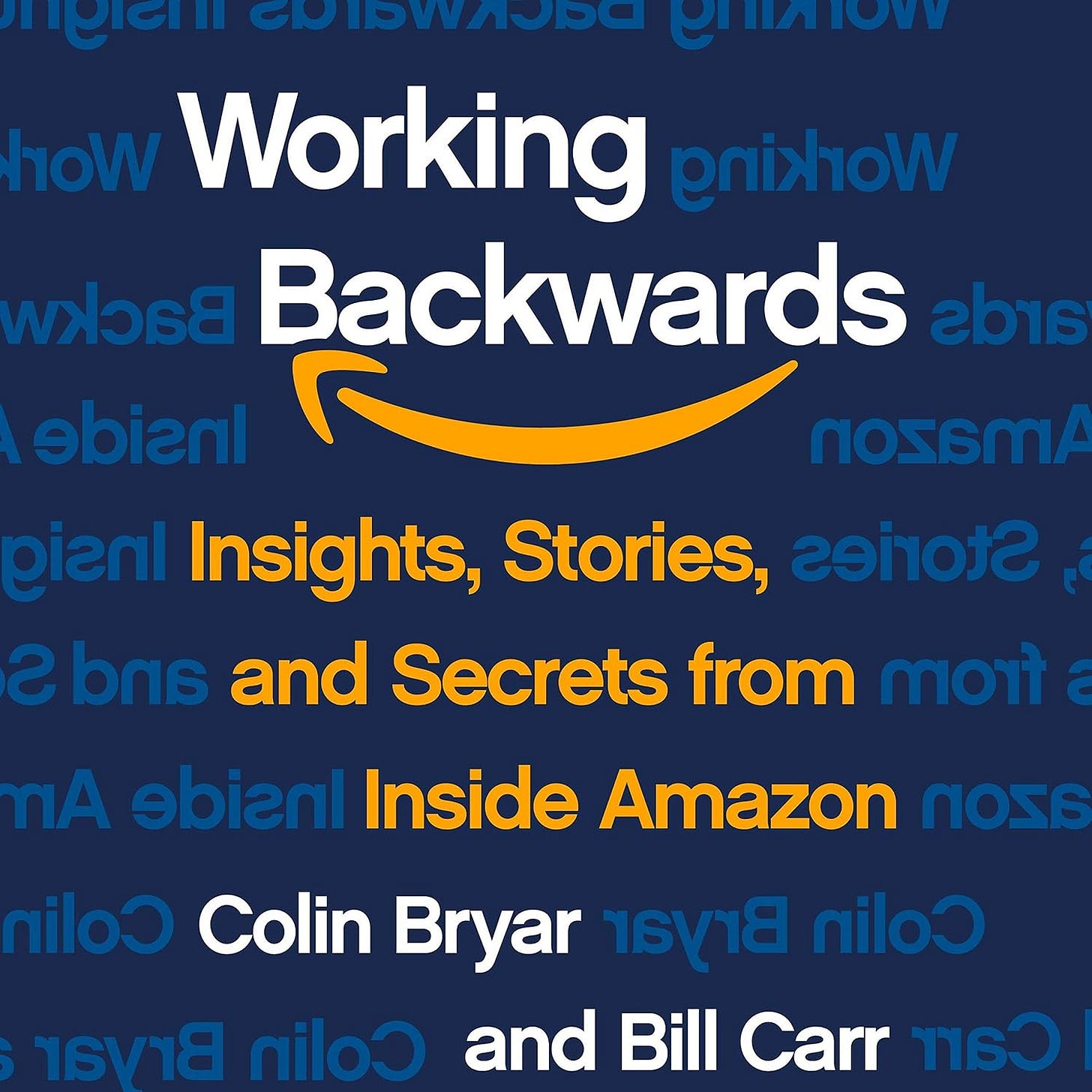
Sources. Bryar and Carr, Working Backwards (St. Martin’s Press, 2021). NIH NOT-OD-23-149, 23 June 2023. NSF merit-review notice, 14 December 2023. FAR 15.308. Gu et al., arXiv 2411.15594; Soumik, arXiv 2604.23178 (preprint).
Ralston Consulting Inc. is an AFITHigerEd.org Learning Partner for 2026.
This post first appeared on The Human Loop, RCI's Substack.